Fill the fields below
REGISTER
Fill the fields below
SIGN-IN
CONGRATULATIONS!
Lorem ipsum dolor, sit amet consectetur adipisicing elit. Quis perferendis ad nisi sit sint est. Porro rerum explicabo sequi eum, assumenda laboriosam veniam a totam eaque velit repellat id fugit?
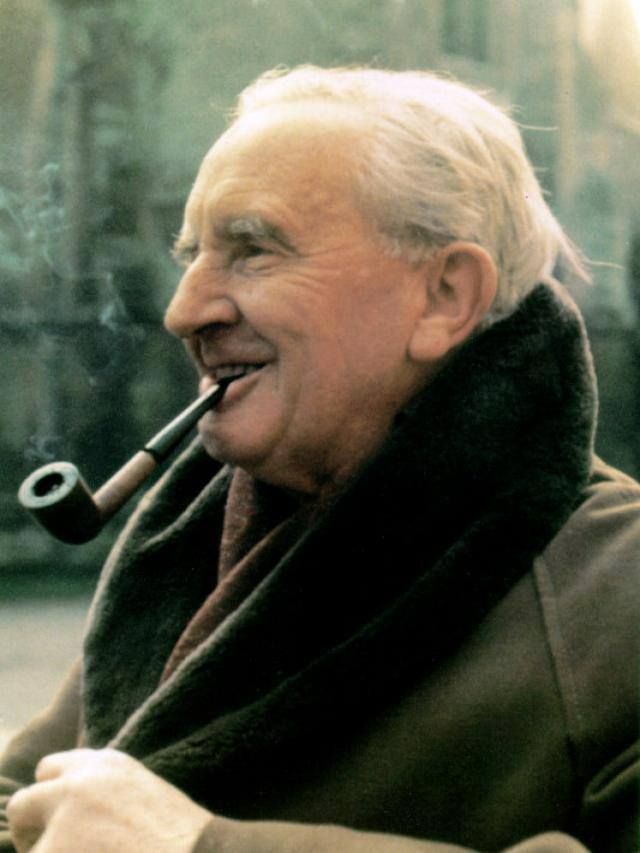
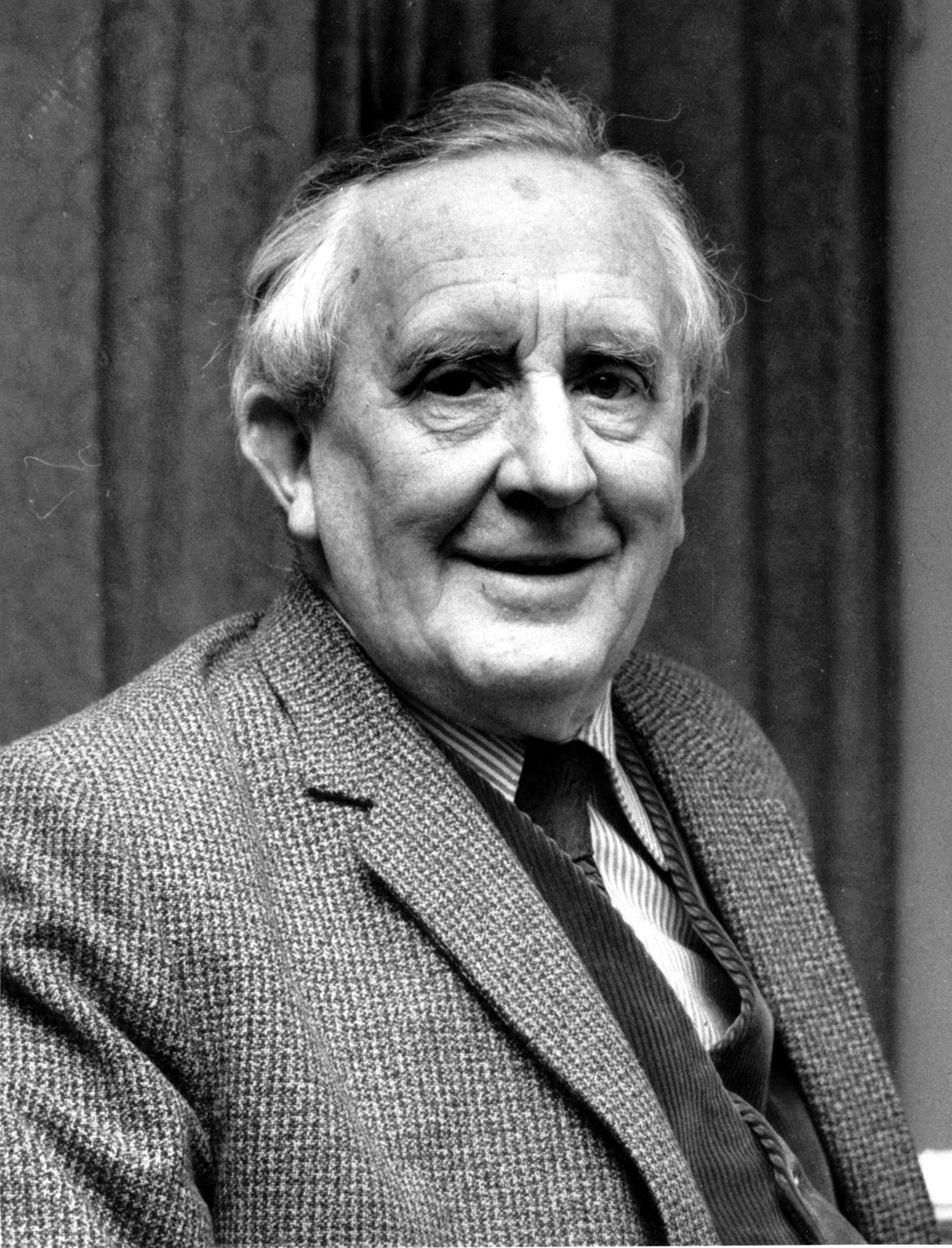
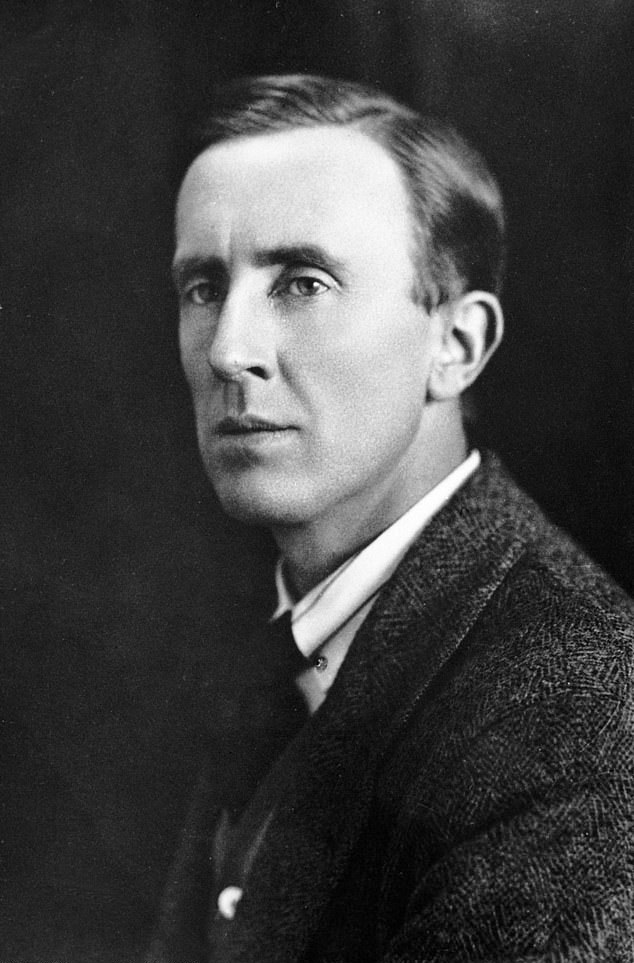
John Ronald Reuel Tolkien
John Ronald Reuel Tolkien CBE FRSL (/ruːl ˈtɒlkiːn/;[a] 3 January 1892 – 2 September 1973) was an English writer, poet, philologist, and academic, best known as the author of the high fantasy works The Hobbit and The Lord of the Rings.
He served as the Rawlinson and Bosworth Professor of Anglo-Saxon and Fellow of Pembroke College, Oxford, from 1925 to 1945 and Merton Professor of English Language and Literature and Fellow of Merton College, Oxford, from 1945 to 1959.[3] He was a close friend of C. S. Lewis—they were both members of the informal literary discussion group known as The Inklings. Tolkien was appointed a Commander of the Order of the British Empire by Queen Elizabeth II on 28 March 1972.
After Tolkien's death, his son Christopher published a series of works based on his father's extensive notes and unpublished manuscripts, including The Silmarillion. These, together with The Hobbit and The Lord of the Rings, form a connected body of tales, poems, fictional histories, invented languages, and literary essays about a fantasy world called Arda and Middle-earth[b] within it. Between 1951 and 1955, Tolkien applied the term legendarium to the larger part of these writings.[4]
While many other authors had published works of fantasy before Tolkien,[5] the great success of The Hobbit and The Lord of the Rings led directly to a popular resurgence of the genre. This has caused Tolkien to be popularly identified as the "father" of modern fantasy literature[6][7]—or, more precisely, of high fantasy.[8] In 2008, The Times ranked him sixth on a list of "The 50 greatest British writers since 1945".[9] Forbes ranked him the fifth top-earning "dead celebrity" in 2009.



Andrzej Sapkowski
Andrzej Sapkowski (Polish pronunciation: [ˈandʐɛj sapˈkɔfskʲi]; born 21 June 1948) is a Polish fantasy writer. He is best known for his book series The Witcher. His works have been translated into over 20 languages.
Sapkowski studied economics at the University of Łódź, and before turning to writing, he had worked as a senior sales representative for a foreign trade company. He started his literary career as a translator, in particular, of science fiction. He says he wrote his first short story, "The Witcher" ("Wiedźmin", also translated "The Hexer" or "Spellmaker") on a whim, in order to enter a contest by Polish science fiction and fantasy magazine Fantastyka. In an interview, he said that being a businessman at the time and thus familiar with marketing, he knew how to sell, and indeed, he won the 3rd prize.[2] The story was published in Fantastyka in 1986 and was enormously successful both with readers and critics. Sapkowski has created a cycle of tales based on the world of "The Witcher", comprising three collections of short stories and five novels. This cycle and his other works have made him one of the best-known fantasy authors in Poland in the 1990s.[3]
The main character of "The Witcher" is Geralt of Rivia, a monster hunter trained for this since childhood. Geralt exists in a morally ambiguous universe, yet manages to maintain his own coherent code of ethics. At the same time cynical and noble, Geralt has been compared to Raymond Chandler's signature character Philip Marlowe.[3] The world in which these adventures take place is heavily influenced by Slavic mythology.
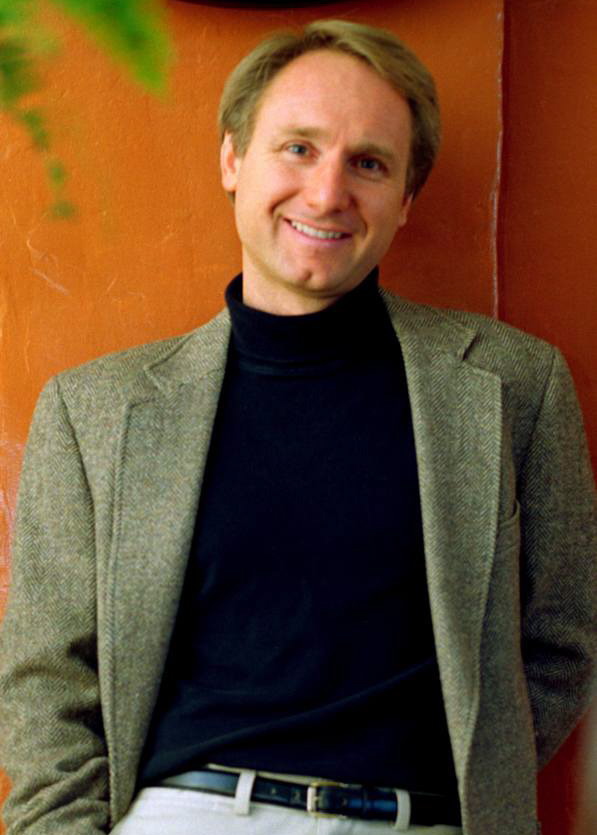


Daniel Gerhard Brown
Daniel Gerhard Brown (born June 22, 1964) is an American author best known for his thriller novels, including the Robert Langdon novels Angels & Demons (2000), The Da Vinci Code (2003), The Lost Symbol (2009), Inferno (2013) and Origin (2017). His novels are treasure hunts that usually take place over a period of 24 hours.[3] They feature recurring themes of cryptography, art, and conspiracy theories. His books have been translated into 57 languages and, as of 2012, have sold over 200 million copies. Three of them, Angels & Demons, The Da Vinci Code, and Inferno, have been adapted into films.
The Robert Langdon novels are deeply engaged with Christian themes and historical fact, and have generated controversy as a result. Brown states on his website that his books are not anti-Christian and he is on a "constant spiritual journey" himself. He claims that his book The Da Vinci Code is simply "an entertaining story that promotes spiritual discussion and debate"[4] and suggests that the book may be used "as a positive catalyst for introspection and exploration of our faith."